
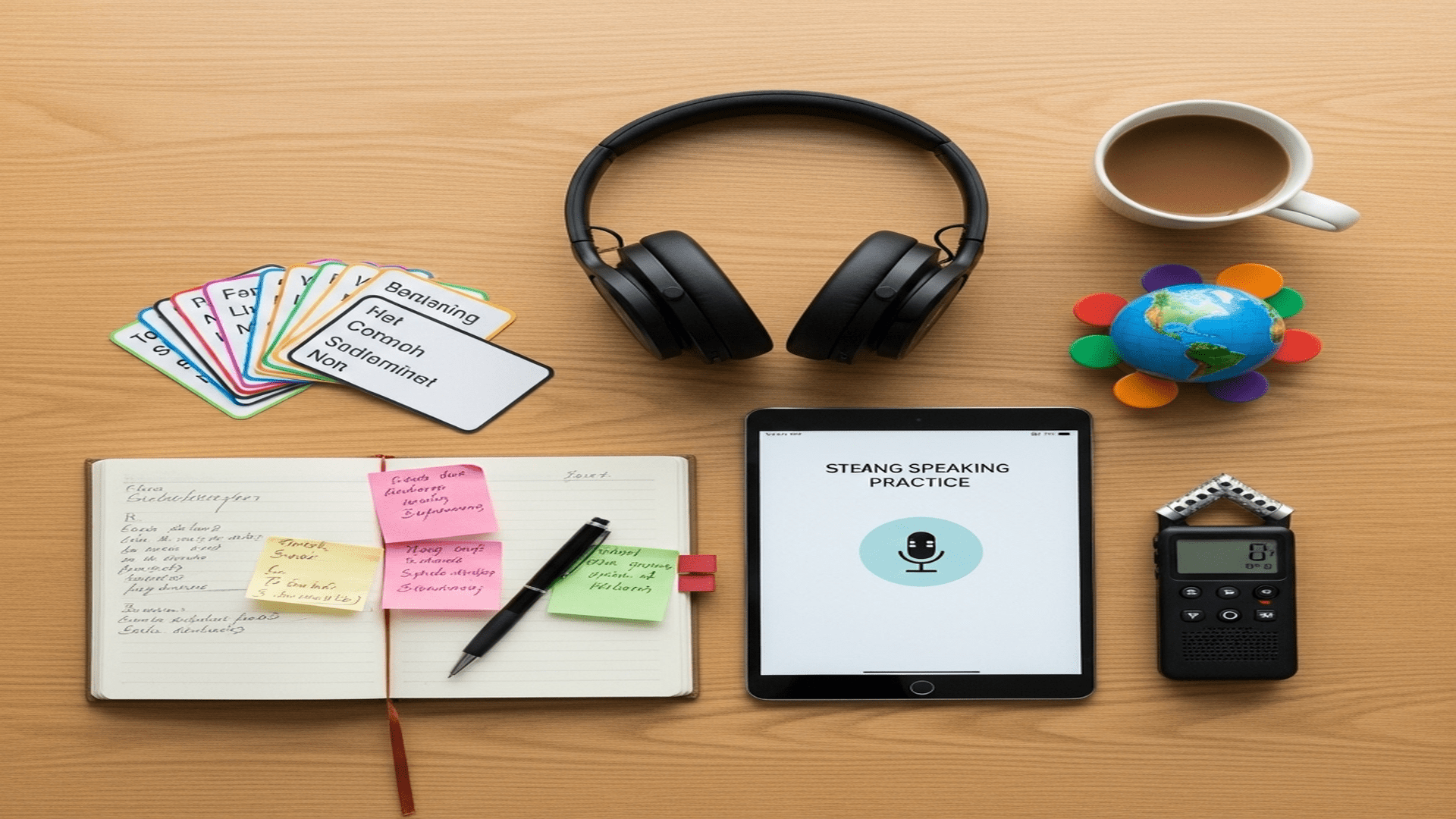
Introduction – The Struggle of Speaking Alone
Many students preparing for international exams such as IELTS, TOEFL, or PTE often say that speaking is the hardest part of the test. Reading, writing, and listening can be done alone, but speaking feels different because it requires real communication. Some students even feel like they are “talking to a wall” when they try to practice alone. The truth is, you don’t always need a fluent partner or expensive coaching to improve your speaking. With the right strategies and simple tools, your home can become your personal language lab.
Why This Matters
Speaking skills are the foundation of successful communication while studying abroad. Imagine giving a class presentation in Canada, ordering food at a restaurant in Australia, or attending a job interview in the UK. In each situation, the ability to express yourself clearly and confidently is essential. For many students, speaking in English is not only a test requirement but also a life skill that determines how well they adjust to student life in a new country. Improving your speaking at home prepares you for these real-life challenges and builds the confidence you need to thrive in an international environment.
Voice Recording Practice
One of the simplest yet most effective tools is your mobile phone’s voice recorder. By recording yourself speaking on different topics, you can hear your own pronunciation, grammar errors, and pauses. This technique allows you to become your own teacher. For example, if you take a common IELTS question such as “Describe a memorable journey,” record a two-minute answer, and then listen to it carefully, you will notice areas where you hesitate or repeat words unnecessarily. Practicing again on the same topic helps you reduce mistakes and improve fluency. Over time, these recordings also allow you to track your progress, which is a great source of motivation.
Shadowing Technique with Videos
Another highly effective method is the shadowing technique. This involves listening to a native English speaker and immediately repeating what they say in the same tone, speed, and style. For instance, you can watch a short TED Talk, news report, or motivational video, pause it after a sentence or two, and then repeat exactly what the speaker said. This exercise helps you to naturally adopt the rhythm and intonation of native speakers. With consistent practice, your accent, pronunciation, and speaking flow improve, making your English sound much more natural.
Online Language Exchange
Even if you cannot travel or attend physical classes, online platforms provide an excellent opportunity to practice with real people around the world. Language exchange apps allow you to connect with learners from different countries who want to practice English, or in return, learn your native language. For example, a student from Pakistan can practice English with a learner from Japan who wants to learn Urdu. This creates a win-win situation where both students benefit. These real conversations expose you to different accents and cultural insights, which are especially useful for adjusting to student life abroad.
AI-Powered Speaking Tools
Modern technology has made speaking practice even easier through artificial intelligence. Several apps now act like virtual tutors by analyzing your pronunciation, fluency, and grammar, then providing instant feedback. For example, when you speak into an app, it can highlight words that you pronounced incorrectly and suggest better alternatives. This is especially helpful for students preparing for standardized tests, where clear pronunciation plays an important role. AI-powered apps give you the experience of having a personal coach without leaving your room.
Practicing in Daily Life
Not all speaking practice has to come from apps or online platforms. You can improve significantly by making English a natural part of your daily routine. Try describing your daily activities in English, such as explaining your cooking steps while in the kitchen or talking about your plans for the day while looking in the mirror. Practicing short dialogues, such as self-introductions or casual small talk, makes you more comfortable in real-life situations. Over time, this reduces the habit of translating from your native language into English and helps you think directly in English, which is a key step to fluency.
Practical Action Steps
To see real improvement, consistency is more important than long hours. Even fifteen minutes of speaking practice every day can bring visible results. Recording yourself once a week, shadowing videos regularly, joining at least one language exchange conversation weekly, and using AI apps for pronunciation will create a balanced speaking routine. Most importantly, do not be afraid of making mistakes. Every mistake is a learning opportunity, and fluency grows when you speak without worrying too much about perfection.
Conclusion – You Don’t Need to Wait
Speaking fluently in English does not happen overnight, but it also does not require waiting for the perfect partner, teacher, or expensive coaching. With simple tools like your phone recorder, online exchanges, AI tutors, and everyday practice, you can take control of your learning journey. The more you practice, the more confident you will become, both for your exams and your study abroad life. Remember, every word you speak today brings you one step closer to your dream of studying and living abroad.
Call to Action
At Letstern, we support students who are preparing for their study abroad journey by offering mock interviews, personalized coaching, membership programs, and an active student community. If you are ready to improve your speaking skills with expert guidance and practical resources, explore Letstern’s programs today and start building the confidence you deserve.
Meta Description
Learn the best speaking practice tools you can use at home for IELTS, TOEFL, and PTE. Improve fluency, confidence, and pronunciation for study abroad success.
Suggested Titles
1. Speaking Practice at Home: Smart Tools for IELTS, TOEFL, and PTE
2. How to Improve English Speaking Skills without a Partner
3. Best Ways to Practice Speaking Alone Before Studying Abroad
4. From Home to Abroad: Speaking Tools That Build Fluency
5. Practical Speaking Tips for Confident Study Abroad Students
Key Takeaways (Social Media Friendly)
1. Recording yourself helps identify and correct mistakes.
2. Shadowing native speakers improves fluency and accent.
3. Online exchanges provide real conversation practice.
4. AI apps act as personal speaking coaches at home.
5. Daily life practice makes English more natural and fluent.
Related articles
More from Tips - How to do Things? and recent posts.

How Long GRE Score Is Valid (2026) | 5-Year Rule & University Policies
If you're planning to apply for graduate school abroad, one of the most important details to track is your GRE score validity. Many students assume their score…
Read article →
Top University Prep Courses in London, Manchester & Birmingham 2026
Dreaming of studying at a UK university but unsure if your qualifications or English skills are ready? University preparation courses—including foundation ye…
Read article →
DAAD Scholarship: Your Gateway to Studying in Germany
DAAD Scholarship: Your Gateway to Studying in GermanyDreaming of studying in Germany, home to some of the world's most prestigious universities and a thriving…
Read article →