
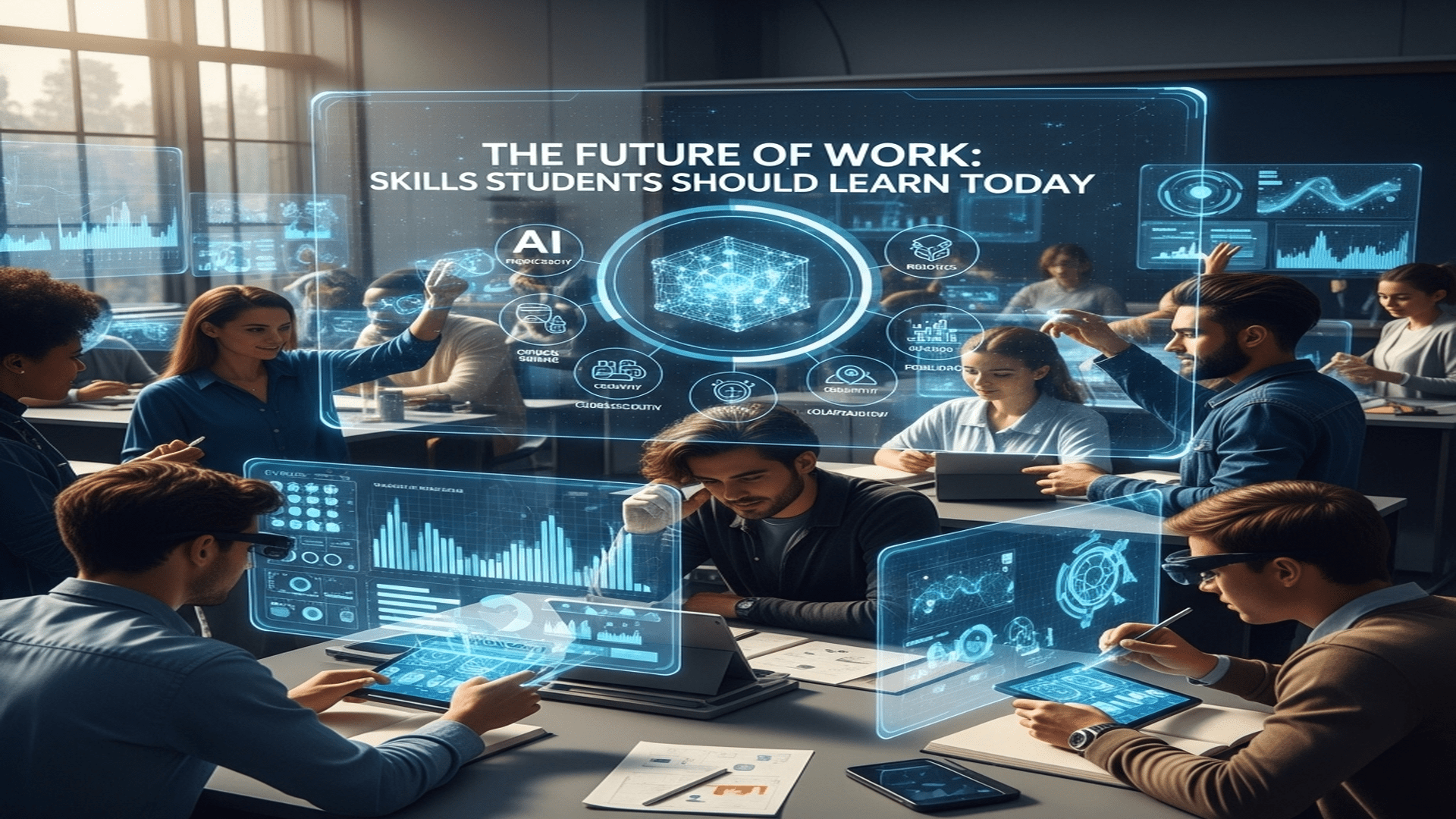
Introduction: Are You Ready for Tomorrow’s Jobs?
You are studying abroad, exploring a new culture, and preparing for your dream career. But here’s the big question: will your current skills still be relevant five or ten years from now? Technology, globalization, and changing work environments are transforming the job market faster than ever before. Many of today’s students will work in roles that don’t even exist yet. That’s both exciting and challenging. The future of work will reward those who are adaptable, creative, and skilled in more than just academics.
Why This Matters for International Students
Studying abroad is about more than earning a degree. It’s also about preparing for life and work in a global economy. International students face unique challenges such as high cost of living, adjusting to new cultures, and competing in diverse job markets. Employers abroad are not only looking for qualifications; they want students who can solve problems, communicate across cultures, and thrive in fast-changing industries.
This means that focusing only on grades is no longer enough. To succeed in the future workplace whether in the United States, Canada, Germany, or Australia students need to start developing the right mix of hard skills (like technology and data literacy) and soft skills (like communication and adaptability).
Essential Skills for the Future of Work
1.Digital Literacy and Technology Skills
Technology is shaping every career, from business and healthcare to engineering and education. Students who understand digital tools will have an advantage no matter where they work. Learning the basics of data analysis, coding, artificial intelligence, or even digital marketing can open doors to countless opportunities. For example, a student studying in Canada might land a part-time job in social media management, while an engineering student in Germany could use data skills for research projects.
Practical Tip: Explore free platforms like Coursera, edX, or LinkedIn Learning to build digital skills alongside your degree. Even one or two online certifications can make your resume stand out in global job markets.
2.Communication and Cross-Cultural Skills
When you study abroad, you interact with people from all over the world. This experience itself is training for the workplace of the future, where multicultural teams are the norm. Strong communication skills, including writing clearly, speaking confidently, and listening carefully, are highly valued.
Cross-cultural skills are equally important. Employers want graduates who can collaborate with colleagues in different countries, respect cultural differences, and adapt their style. For example, workplace communication in Japan may be more formal than in the United States, and students who understand these differences will succeed more quickly.
Practical Tip: Join university clubs, volunteer programs, or student organizations abroad. These give you real-life practice in working with diverse teams while building your confidence.
3.Adaptability and Problem-Solving
The workplace of the future will keep changing. Careers are no longer “lifelong” in the traditional sense. Instead, people often switch industries or roles multiple times. This means students need adaptability—the ability to learn quickly, unlearns outdated habits, and solves unexpected problems.
Think about the global pandemic: many students suddenly shifted to online learning, and businesses moved to remote work. Those who adapted quickly were the ones who continued to thrive. The same flexibility will be required in future workplaces.
Practical Tip: Challenge yourself to step outside your comfort zone. Try internships in different industries, take elective courses outside your major, or work on group projects with students from other fields.
4.Critical Thinking and Creativity
Automation and artificial intelligence are becoming smarter, but machines still cannot replace human creativity and critical thinking. Employers look for graduates who can analyze information, make smart decisions, and come up with innovative solutions.
For example, a marketing student in the UK might use creative storytelling to design a campaign, while a data science student in Australia could apply critical thinking to interpret complex data. These skills make you valuable because you bring ideas that technology cannot.
Practical Tip: Practice brainstorming, case studies, and problem-based assignments. Whenever you work on a project, don’t just aim for the “correct” answer—aim for a new and better approach.
5.Emotional Intelligence and Leadership
Future workplaces will rely heavily on collaboration. Students, who can manage their emotions, understand others, and lead with empathy will stand out. Emotional intelligence (EQ) is about more than being “nice” it’s about building trust, resolving conflicts, and motivating teams.
For example, if you are studying in Australia and working part-time in a restaurant, your ability to stay calm during busy hours and handle customers politely is a sign of emotional intelligence. Later, in your professional career, the same skill will help you manage international teams.
Practical Tip: Pay attention to feedback from professors, colleagues, and friends. Work on self-awareness by reflecting on how you react in stressful situations, and learn to turn criticism into growth.
Practical Steps for Students to Build Future Skills
The good news is that you don’t need to wait until graduation to start preparing. You can build these skills while studying abroad by:
- Taking online courses in technology, languages, or business.
- Volunteering or joining international student communities to practice leadership and communication.
- Seeking internships, part-time jobs, or freelance projects that give you real-world exposure.
- Practicing time management and balance between academics, work, and social life.
- Building a global network of mentors, professors, and peers who can support your career journey.
Every small step adds up. By the time you graduate, you’ll not only have a degree but also a strong skill set that employers around the world are searching for.
Conclusion: Prepare Today, Shine Tomorrow
The future of work is uncertain, but one thing is clear: students who are adaptable, digitally skilled, and emotionally intelligent will always be in demand. Studying abroad gives you a unique advantage because you are already learning how to live and thrive in a new environment. Combine that experience with future-ready skills, and you will not only survive in tomorrow’s job market you will lead it.
Call to Action: Take the Next Step with Letstern
At Letstern, we’re committed to helping international students prepare for success. From mock interviews and career coaching to skill-building workshops and a supportive community, we guide you every step of the way. Whether you’re looking for part-time jobs abroad, internships, or long-term career opportunities, Letstern is your trusted partner. Join our membership today and start shaping your future with confidence.
Meta Description
Discover the future of work and the essential skills students should learn today. A guide for international students to prepare for global careers.
Suggested Titles
1. The Future of Work: Skills Every International Student Needs Today
2. Future-Proof Your Career: Essential Skills for Students Abroad
3. Global Careers 2030: What Skills Should Students Learn Now?
4. Study Abroad Success: Building the Skills of the Future
5. From Campus to Career: How Students Can Prepare for Tomorrow’s Jobs
Key Takeaways
1. The future of work demands digital literacy, adaptability, and emotional intelligence.
2. Studying abroad is the perfect opportunity to build global and cross-cultural skills.
3. Employers value problem-solving, creativity, and leadership as much as academic success.
4. Students can prepare now through online learning, internships, and networking.
5. Future-ready skills open doors to global careers and leadership opportunities.
Related articles
More from Career & Personal Development and recent posts.

Adapting to Fast-Paced Life in Singapore
IntroductionIf you are considering Singapore as your study abroad destination, one thing you will quickly notice is the incredible speed at which life moves he…
Read article →
Part-Time Job Opportunities for International Students in Japan
IntroductionStudying in Japan is an exciting adventure filled with academic opportunities, cultural experiences, and personal growth. But let’s be honest—l…
Read article →
Part-Time Job Opportunities for Students in the UK
Introduction – Balancing Study and Work in a New CountryImagine stepping into a new life in the UK: the historic buildings, diverse culture, and vibrant st…
Read article →