
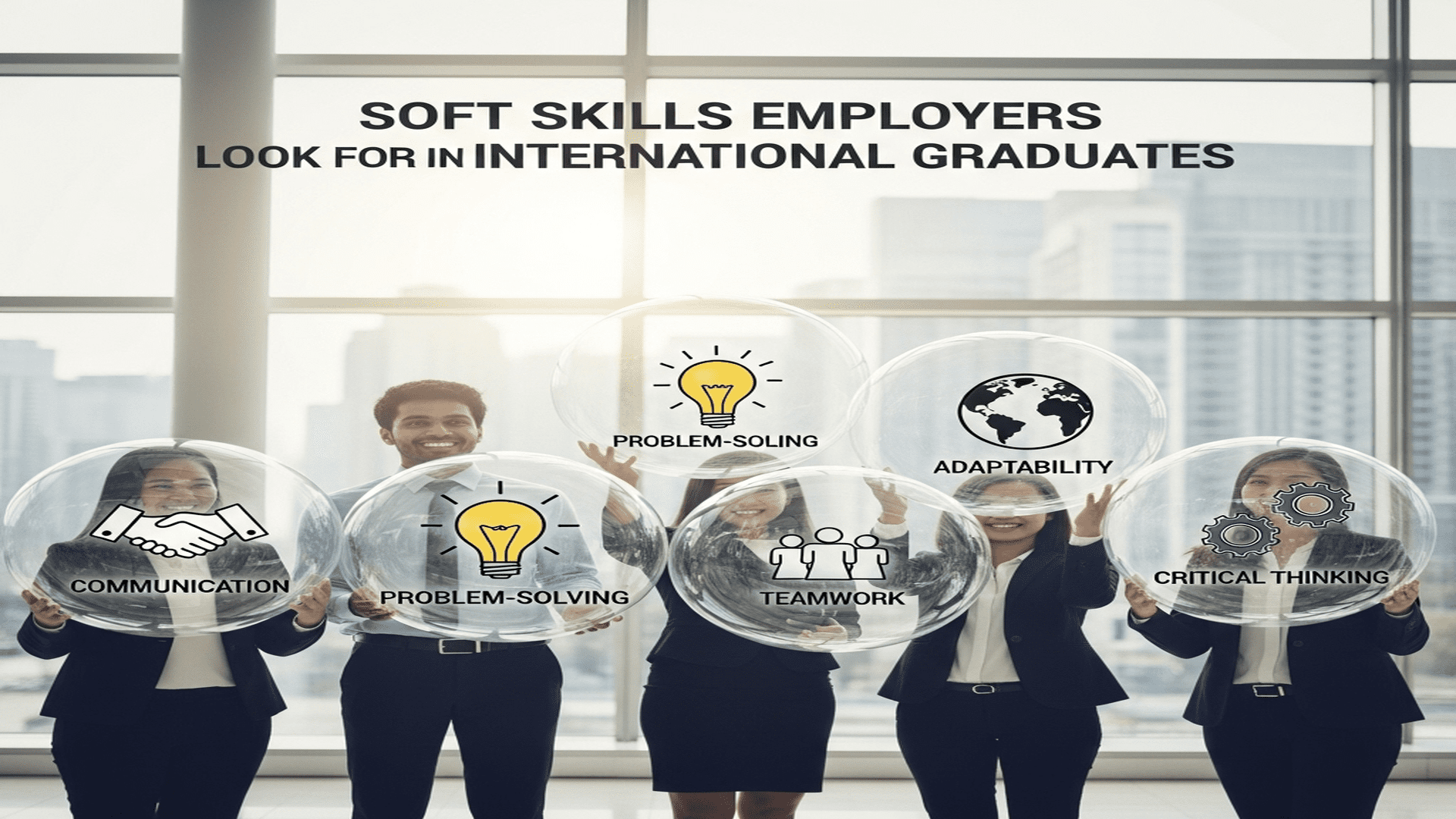
Soft Skills Employers Look for in International Graduates
Introduction: The Hidden Edge Beyond Degrees
Imagine two international graduates applying for the same job. Both have strong academic records, valuable internships, and a clear passion for their field. Yet, one of them gets hired while the other keeps waiting for interview calls. What made the difference? In today’s competitive global job market, employers are not only looking at grades and technical skills but also at the soft skills that shape how a person communicates, adapts, and collaborates. For international students, mastering these skills can be the deciding factor between blending into the crowd and standing out as a confident professional.
Why Soft Skills Matter for International Graduates
Studying abroad already shows resilience and adaptability, but stepping into the professional world requires more than academic knowledge. Employers in countries like the USA, UK, Canada, and Australia emphasize workplace culture, communication, and teamwork. A degree might open doors, but soft skills help graduates thrive inside. These skills allow international students to bridge cultural gaps, build strong professional relationships, and demonstrate that they can succeed in diverse work environments.
Communication Skills: The Foundation of Global Careers
Clear and confident communication is one of the most valued skills worldwide. International graduates often face challenges with language fluency, professional etiquette, and expressing ideas in culturally appropriate ways. Employers want professionals who can listen actively, present ideas clearly, and write with accuracy. For example, an engineering graduate from India working in Germany might excel at technical tasks, but their ability to explain complex ideas to colleagues in simple terms makes them indispensable. Practicing presentations, engaging in group discussions, and improving email writing can help students polish this skill.
Teamwork and Collaboration in Multicultural Settings
Modern workplaces thrive on collaboration. International graduates often work in teams that include people from multiple cultural backgrounds. Employers appreciate candidates who respect diverse perspectives, resolve conflicts politely, and contribute to collective goals. A student from Nigeria studying in Canada, for instance, may bring fresh ideas to a project team, but what matters is how they listen to others, acknowledge different viewpoints, and help the group move forward. Joining student clubs, volunteering, or participating in group projects during study abroad can build real-world teamwork skills.
Adaptability and Problem-Solving in a Fast-Changing World
Employers value graduates who can handle change with a positive attitude. In 2025, industries are evolving rapidly due to AI, remote work, and global competition. International students who adapt quickly to new tools, work styles, or business models show they are future-ready. For example, a graduate in the UK who embraces hybrid work environments and learns new digital tools quickly is more attractive to employers than someone who resists change. Demonstrating problem-solving through internships or research projects also highlights adaptability in action.
Cultural Intelligence and Emotional Awareness
Living abroad gives students a natural advantage in cultural intelligence the ability to understand and respect different customs, traditions, and work practices. Employers want graduates who are sensitive to cultural nuances and can build strong relationships with colleagues and clients from around the world. Emotional awareness also plays a key role, as graduates who manage stress, show empathy, and remain professional under pressure become valuable assets in any workplace. Sharing stories of how you navigated cultural differences during your studies can impress recruiters during interviews.
Leadership and Professional Growth Mindset
Leadership is not only about managing teams but also about taking initiative, staying accountable, and inspiring others. Employers want graduates who take responsibility, suggest solutions, and show confidence in decision-making. Even small examples such as leading a student project, mentoring peers, or organizing cultural events can highlight leadership potential. Combined with a growth mindset, where students show eagerness to learn and improve these qualities can make a graduate stand out in global job markets.
Practical Steps to Build Soft Skills Abroad
International students can actively develop these skills while studying. Engaging in internships, part-time jobs, or volunteering helps put theory into practice. Attending networking events, joining professional associations, and practicing mock interviews builds confidence. Even small daily habits, like speaking in English with peers, keeping a reflective journal, or seeking feedback from professors, can accelerate growth. By treating university life as both an academic and personal development journey, students can graduate with the well-rounded profile employers want.
Conclusion: The Soft Skills Advantage
Technical knowledge may land you an interview, but soft skills often secure the job. For international graduates, the ability to communicate clearly, collaborate effectively, adapt quickly, and lead with empathy is what sets them apart in a crowded job market. Employers do not just hire for skills they hire for potential, attitude, and the value you bring to a team. If you are an international student preparing for your career, investing in soft skills is not optional it is essential.
Call to Action: Build Your Career with Letstern
At Letstern, we understand the challenges international students face when entering the global job market. That is why we provide resources such as mock interviews, career coaching, and community support to help you develop both professional and soft skills. Explore our coaching sessions, memberships, and mentorship programs to take your career preparation to the next level. With Letstern by your side, you can step into your interviews abroad with confidence and clarity.
Meta Description
Discover the top soft skills employers seek in international graduates. Learn how communication, adaptability, and teamwork can shape your global career success.
Suggested Titles
1. Essential Soft Skills Employers Want in International Graduates
2. How International Students Can Master Soft Skills for Career Success
3. Beyond Degrees: Soft Skills That Make Global Graduates Employable
4. Top Soft Skills for International Students Entering the Job Market
5. Why Soft Skills Matter More than Ever for Study Abroad Graduates
Key Takeaways (Social-Media-Friendly)
1. Employers value soft skills like communication and adaptability as much as technical knowledge.
2. International students can build soft skills through teamwork, volunteering, and networking.
3. Cultural intelligence and emotional awareness are key to thriving abroad.
4. A growth mindset and leadership qualities make graduates stand out globally.
5. Soft skills are not optional they are essential for global career success.
Related articles
More from Career & Personal Development and recent posts.

Adapting to Fast-Paced Life in Singapore
IntroductionIf you are considering Singapore as your study abroad destination, one thing you will quickly notice is the incredible speed at which life moves he…
Read article →
Part-Time Job Opportunities for International Students in Japan
IntroductionStudying in Japan is an exciting adventure filled with academic opportunities, cultural experiences, and personal growth. But let’s be honest—l…
Read article →
Part-Time Job Opportunities for Students in the UK
Introduction – Balancing Study and Work in a New CountryImagine stepping into a new life in the UK: the historic buildings, diverse culture, and vibrant st…
Read article →