
Introduction
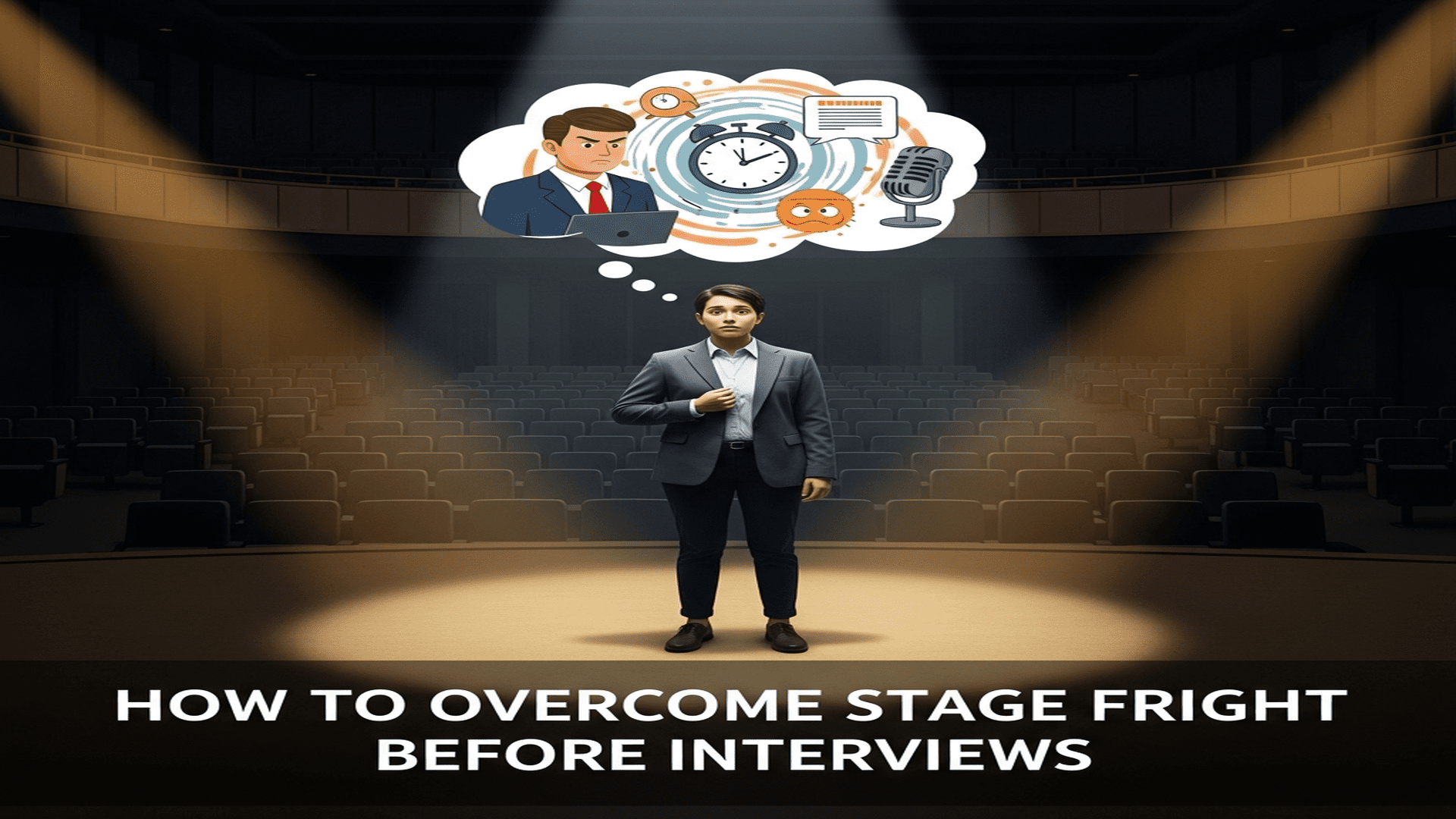
Almost every student has experienced that moment when the heart starts racing, palms begin to sweat, and the mind suddenly goes blank just before an important interview. Whether it is for a scholarship, a visa application, or a job opportunity abroad, this nervous tension—commonly known as stage fright—can feel overwhelming. The good news is that stage fright is not a sign of weakness. It is actually a natural response that shows you care about the outcome. With the right strategies and mindset, you can learn to control it and walk into your interviews with calm confidence.
Why This Matters for International Students
For international students, interviews play a central role in shaping their journey abroad. From visa interviews at embassies to selection processes for part-time jobs, internships, and future career placements, the ability to perform well under pressure often becomes the key to opening doors. The challenge, however, is that studying abroad also brings new cultural experiences. Nervousness can be heightened when students are unsure about local customs, communication styles, or what interviewers expect in different countries.
For example, interviews in the United States or Canada often feel more conversational, where employers look for personality and confidence. In contrast, in Germany or Japan, the process may be more formal, with a stronger emphasis on discipline and structure. If students cannot control their stage fright, these cultural differences may add an extra layer of stress. This is why overcoming interview nerves is not just about personal growth; it is a skill that directly affects international opportunities and long-term success.
Understanding Stage Fright
Stage fright is often misunderstood as a weakness or a lack of preparation, but in reality, it is the body’s natural stress response. When we face a high-stakes situation such as an interview, the brain perceives it as a challenge and releases adrenaline. This explains why the heart beats faster, the mouth goes dry, or the voice trembles. Recognizing this can be empowering, because it means stage fright is not a personal flaw but a normal reaction that can be managed.
Even some of the world’s most successful speakers, leaders, and performers admit that they feel nervous before stepping on stage. The difference is that they have learned how to channel this energy into focus and enthusiasm instead of panic. For students, the same principle applies: if you understand your body’s signals and learn to manage them, you can turn nervousness into a source of strength rather than weakness.
Preparing Before the Interview
Preparation remains the most effective solution to stage fright. The more prepared you are, the less room there is for doubt and anxiety. Begin by thoroughly researching the organization or institution where you are applying. Learn about their values, mission, and expectations so that you can tailor your answers accordingly. Practice answering common questions such as “Tell me about yourself,” “Why do you want to study or work here?” or “What are your strengths and weaknesses?”
For international students, practicing in English or the local language of the host country makes a big difference. Speaking aloud, recording yourself, or practicing with a mentor allows you to become more comfortable with vocabulary and tone. Mock interviews are especially powerful because they replicate the pressure of real situations. Platforms like Letstern provide professional coaching that helps students prepare for these scenarios in a supportive environment. The more familiar you are with the process, the more confident you will feel.
Staying Calm Before and During the Interview
No matter how well you prepare, it is natural to feel a rush of nerves on the day of the interview. The key is not to fight these feelings but to control them. Deep breathing before entering the room helps regulate your heartbeat and gives your mind clarity. Visualization also works powerfully—imagines yourself walking in with confidence, shaking hands politely, and answering questions with ease. This mental rehearsal often translates into real performance.
Body language also plays a critical role. Standing tall, maintaining eye contact, and offering a genuine smile can create a positive impression while also boosting your own confidence. Even if your voice shakes in the beginning, remember that interviewers are human too. Most of them understand nerves and are not looking for perfection, but rather for authenticity, enthusiasm, and potential.
Adapting to Cultural Differences
One reason stage fright is especially common among international students is the uncertainty of cultural expectations. Different countries have different interview traditions, and not knowing what is appropriate can increase anxiety. For example, in the United Kingdom or Australia, it is common for interviewers to start with casual conversation, so being able to chat comfortably can ease tension. In contrast, in many Asian countries such as Japan or South Korea, showing humility, politeness, and careful choice of words is highly valued.
By researching these differences and practicing accordingly, students can feel more prepared and less anxious. Engaging with local student communities, attending career workshops, and observing the interview experiences of peers can provide useful insights. With cultural awareness, stage fright gradually reduces because students know what to expect and how to present themselves.
Turning Nerves into Confidence
The final step in overcoming stage fright is learning to embrace nervous energy instead of fighting it. A little adrenaline can actually sharpen your focus and make your answers sound more energetic and passionate. If you stumble over a word or pause briefly, do not panic. What matters is how you recover and continue with confidence. Interviewers usually pay attention to overall composure, not minor slips.
Every interview becomes easier than the last. With practice and reflection, you build resilience and self-assurance. Over time, the fear that once seemed overwhelming turns into a motivating force that pushes you to do better.
Conclusion
Stage fright before interviews is a common experience, but it does not have to control your success. By preparing thoroughly, practicing regularly, staying calm, and understanding cultural differences, you can turn nerves into confidence. Remember, interviewers are not looking for someone perfect; they are looking for someone genuine, adaptable, and eager to grow. Each interview is not just a test but an opportunity to learn and improve. With every step, you get closer to your study abroad dreams and career goals.
Call to Action
At Letstern, we are committed to supporting international students who want to succeed in interviews and beyond. Our tailored resources—including mock interviews, one-to-one coaching, and mentorship programs—help you gain the confidence you need to shine in front of any interviewer, anywhere in the world. Join the Letstern community today and take your first step toward mastering the art of successful communication.
Meta Description:
Learn how to overcome stage fright before interviews with preparation, cultural insights, and confidence-building techniques. Perfect for study abroad success.
Suggested Titles:
1. How to Overcome Stage Fright before Interviews Abroad
2. Mastering Interviews: A Student’s Guide to Beating Stage Fright
3. Study Abroad Success: Conquering Interview Nerves
4. From Nervous to Confident: Overcoming Stage Fright Before Interviews
5. Stage Fright No More: Interview Success for International Students
Key Takeaways:
1. Stage fright is natural but manageable with preparation.
2. Confidence grows through practice and mock interviews.
3. Cultural awareness reduces uncertainty and stress.
4. Nervous energy can be turned into strength.
5. Every interview is a step toward growth and global success.
Related articles
More from Career & Personal Development and recent posts.

Adapting to Fast-Paced Life in Singapore
IntroductionIf you are considering Singapore as your study abroad destination, one thing you will quickly notice is the incredible speed at which life moves he…
Read article →
Part-Time Job Opportunities for International Students in Japan
IntroductionStudying in Japan is an exciting adventure filled with academic opportunities, cultural experiences, and personal growth. But let’s be honest—l…
Read article →
Part-Time Job Opportunities for Students in the UK
Introduction – Balancing Study and Work in a New CountryImagine stepping into a new life in the UK: the historic buildings, diverse culture, and vibrant st…
Read article →