
Essential Documents Every Student Needs for a Visa Interview
Introduction
Picture this: you’ve got your admission letter from your dream university abroad. Excitement is high, your bags are half-packed, and you’re already imagining student life in a new country. But before you board that flight, there’s one final challenge: the student visa interview. For many students, this step feels overwhelming not because they aren’t qualified, but because they aren’t fully prepared with the right documents.
The truth is, even a missing piece of paper can delay or even ruin your study-abroad plans. That’s why knowing exactly which documents to carry is as important as preparing your interview answers.
Why This Matters for International Students
Visa officers want proof that you are a genuine student with the financial ability and clear intention to study abroad. Documents are your strongest evidence. When they are complete, consistent, and well-organized, you immediately create a good impression. But when something is missing or confusing, it raises red flags and could risk rejection.
Being prepared with the correct documents not only saves time but also helps you answer confidently during the interview. Remember, your paperwork speaks for you even before you do.
The Essential Documents You Must Carry
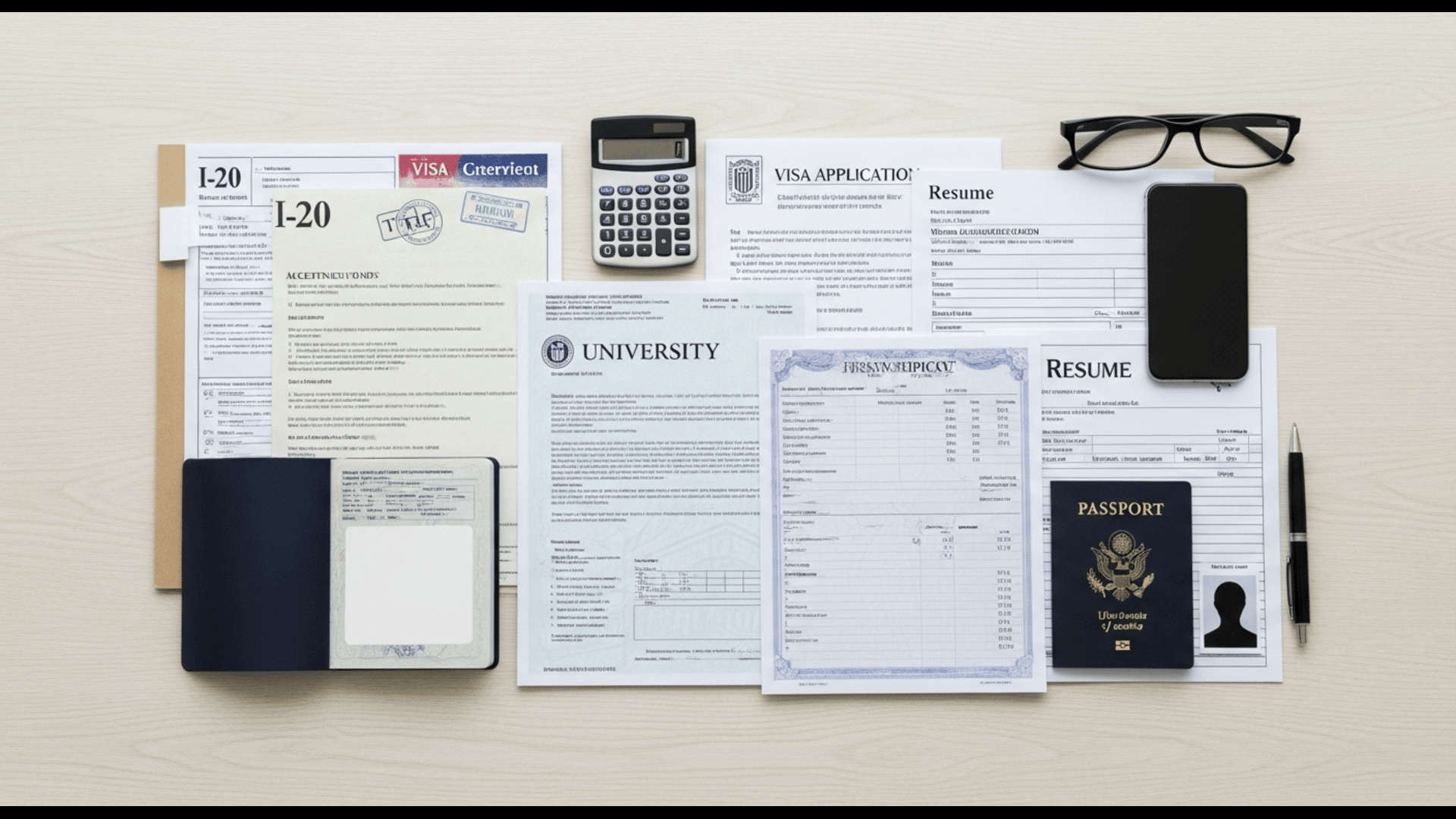
1. Valid Passport and Visa Application Form
Your passport is the foundation of your journey—it must be valid for the entire duration of your studies. Along with it, the visa application form (such as DS-160 for the US or the appropriate online form for other countries) must be correctly filled and printed.
Tip: Double-check details like your name, date of birth, and passport number. Even a small error can cause unnecessary delays.
2. University Offer Letter and I-20/Confirmation of Enrollment
Visa officers need proof that you have secured admission. For US students, this means your I-20 form; for UK, the CAS letter; for Australia, the CoE (Confirmation of Enrollment). Without these, your application has no base.
Example: A student once attended a UK visa interview without the CAS letter, assuming the admission email was enough. The visa was delayed for months. Don’t let this happen to you—always carry the official document.
3. Academic Records and Test Scores
Your transcripts, mark sheets, degree certificates, and test scores (IELTS, TOEFL, GRE, GMAT, etc.) prove your academic ability. Officers want to ensure you meet the entry requirements of your chosen university.
Tip: Organize them chronologically in a folder. It shows professionalism and saves you from fumbling if asked to present them quickly.
4. Financial Documents and Proof of Funds
One of the biggest reasons for visa rejection is weak financial proof. You must show that you can cover tuition, living expenses, and other costs of living in your study-abroad destination. This includes:
- Bank statements (usually 3–6 months)
- Sponsorship letters (if parents or relatives are funding you)
- Scholarship award letters
- Loan approval letters
Insight:Visa officers often compare your funds with the official cost of living in countries like Canada, the UK, or Australia. Be ready to explain your financial sources clearly.
5. Statement of Purpose (SOP) and Study Plan
Not all embassies ask for it, but having a printed copy of your SOP or study plan is wise. It explains why you chose your course, university, and how it fits your career goals.
Tip: Keep your SOP short and direct for the interview. Officers don’t need lengthy essays, but a well-prepared plan shows clarity of thought.
6. Health and Character Certificates
Some countries (like Australia or New Zealand) may require medical exam results and police clearance certificates to ensure you meet health and character standards.
Example: An Indian student applying to Australia was asked for a medical clearance report at the interview. Luckily, she had it ready, which saved her application from being delayed.
7. Proof of English Language Proficiency
Most English-speaking countries require IELTS, TOEFL, or PTE scores. Even if you’ve already submitted them to the university, it’s smart to carry original scorecards for the visa interview.
Practical Tips for Organizing Your Documents
- Use a labeled file or folder with sections for each category.
- Keep both originals and photocopies ready.
- Arrange documents in the order they might be asked.
- Practice taking them out confidently without fumbling.
- Carry digital backups on a USB drive or cloud storage for emergencies.
Conclusion
Your visa interview is not just a conversation it’s a test of how prepared and genuine you are as a study-abroad candidate. Having the right documents in order gives you confidence and sends a clear message to the visa officer: I am ready.
Remember, this is the final step before your dream becomes reality. Stay organized, stay calm, and walk into the interview with confidence.
Call to Action
At Letstern, we help students prepare for every step of the journey—from choosing the right course to perfecting their visa documents. Join our community, book a mock visa interview, or get personalized coaching to make your study-abroad dream stress-free.
Meta Description
Learn the essential documents you must carry for your student visa interview. Avoid mistakes, stay confident, and secure your study-abroad journey.
Suggested Titles
1. Essential Documents Every Student Needs for a Visa Interview
2. Student Visa Checklist: Must-Have Documents for Success
3. Don’t Miss These Documents for Your Study-Abroad Visa Interview
4. Student Visa Interview Preparation: Key Documents You Need
5. Study Abroad Visa Success: Documents That Make the Difference
Key Takeaways (Social Media-Friendly)
1. Missing even one key document can delay or deny your visa.
2. Proof of funds is just as important as your academic records.
3. Always carry official offer letters (CAS, I-20, CoE).
4. Organize documents neatly to show confidence and preparation.
5. Digital and physical backups save you from last-minute problems.
Related articles
More from Study Abroad & Universities and recent posts.
Understanding University of Bologna Master's Tuition Fees for 2026/2027
Planning to pursue a Master's degree at the University of Bologna, the oldest university in the Western world? Understanding the tuition fees is a crucial st…
Read article →
UK January Intake Visa Delays — A Stressful Start for International Students
This year’s January intake in the UK hasn’t gone as smoothly as many students and universities had hoped. Instead of excitement and new beginnings, thousan…
Read article →
Austria Fully Funded Government Scholarships 2025-2026 (Without IELTS)
IntroductionMany students dream of studying in Europe but often worry about two big challenges: the high cost of education and the pressure of English tests li…
Read article →